

In a major relief for tax consultants and taxpayers, the Federal Board of Revenue (FBR) has reportedly removed the mandatory QR code scanning for IRIS login, a multi-factor authentication (MFA) step that had been widely criticized for causing significant operational hurdles.
For months, tax practitioners and taxpayers had been voicing their frustrations over the new login method, which required them to use the “Tax Asaan” mobile app to scan a QR code every time they attempted to access the IRIS portal. This system, which was introduced to enhance security and prevent fraudulent activities like the issuance of “fake and flying invoices,” was instead seen as a major inconvenience.
The Pakistan Tax Advisors Association, among other bodies, had heavily criticized the FBR’s decision. They argued that for tax practitioners handling dozens of client accounts, the constant need to coordinate with each client for the QR code scan was an “impossible” and time-consuming process. They also pointed to frequent system breakdowns and slow-downs, which forced users to repeat the cumbersome login procedure multiple times.
The removal of the QR scan option comes as a welcome change, though the FBR has not yet made an official announcement or issued a formal clarification. As of now, the pop-up notification on the FBR website still instructs users to use the MFA feature, creating a contradictory message for taxpayers.
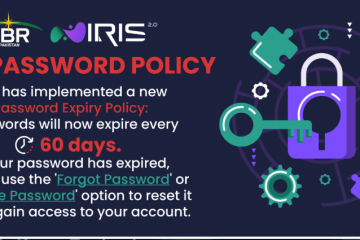
This is not the first FBR security measure to draw criticism. The FBR had previously implemented a mandatory password reset policy every 60 days, which also faced backlash from the business community, particularly from the Lahore Chamber of Commerce and Industry (LCCI), which argued it was a disruptive measure for small and medium-sized enterprises.
While the FBR’s intent behind these changes was to strengthen the security of the IRIS portal, the implementation often resulted in an undue burden on compliant taxpayers. The silent removal of the QR scan feature suggests the FBR may be responding to the persistent criticism from the tax community. This move is expected to streamline the login process and save valuable time for tax professionals and taxpayers alike, allowing for a smoother tax compliance process.