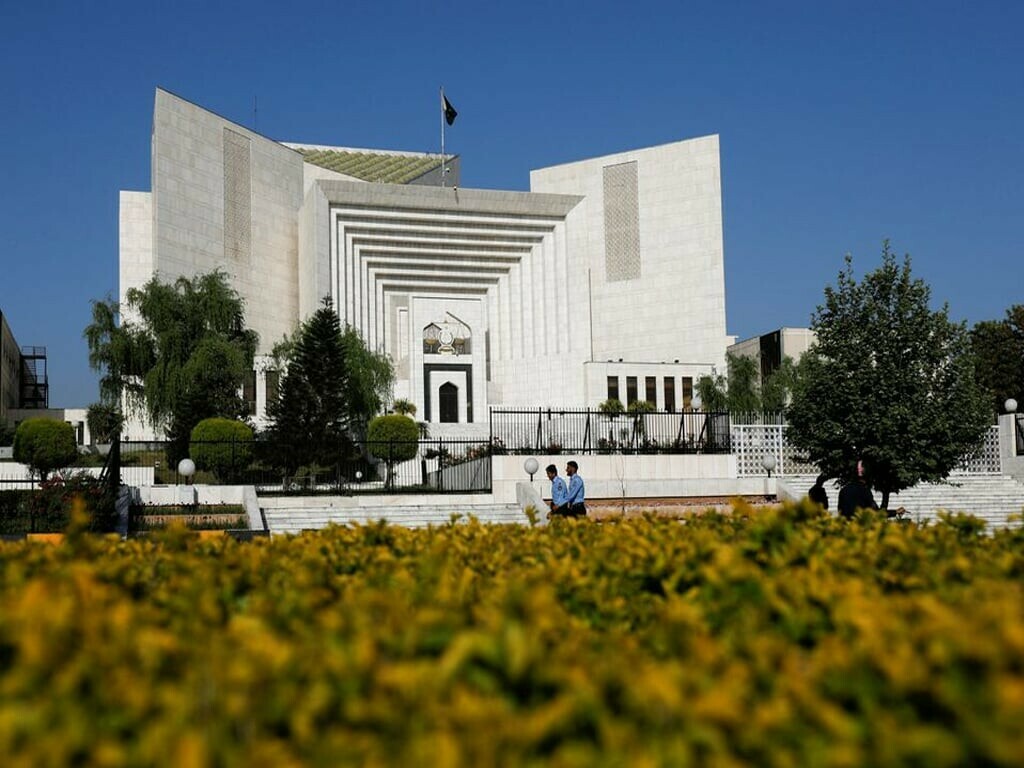

The Supreme Court of Pakistan was informed on Monday that the Super Tax imposed under Section 4C of the Income Tax Ordinance, 2001, was an arbitrary measure designed to raise Rs215 billion, contrary to constitutional protections.
A five-member larger bench, headed by Justice Amin-ud-Din Khan, heard appeals filed by the Federal Board of Revenue (FBR) and various industries against the judgments of the Sindh, Lahore, and Islamabad High Courts, which had questioned the validity of the levy.
Advocate Sirdar Ahmed Jamal Sukhera, representing the taxpayers, argued that while the government justified the Super Tax on grounds of fiscal need, the Constitution does not allow arbitrary action or legislation. He highlighted that the government itself admitted the tax was aimed solely at raising Rs215 billion to meet its financial gap.
The counsel submitted that alternative avenues to generate fiscal space existed but were ignored. Reports from the Cabinet and the World Bank indicated that Pakistan could create Rs1.7 trillion annually by curtailing federal spending, reducing losses of state-owned enterprises (Rs600–800 billion), saving Rs328 billion on devolved subjects, and adopting a single treasury account that could save Rs404 billion. Additionally, curbing electricity theft worth Rs600 billion could alone offset the amount targeted through Super Tax.
Sukhera contended that the government’s persistent practice of raising taxes on existing, compliant taxpayers while failing to expand the tax base is “arbitrary, oppressive, and unjust,” and violates due process under Article 10-A as well as property rights under Article 23 of the Constitution. He stressed that income tax payers are already burdened with high rates — 29% on income and 15% on dividends — while non-filers continue to evade taxation.
He further criticized the definition of “income” under Section 4C, which disallows deductions for business losses and depreciation. This, he argued, effectively results in taxing expenses rather than actual income, rendering the levy unconstitutional.
During the proceedings, Justice Muhammad Ali Mazhar observed that the argument regarding the government’s failure to explore alternative fiscal measures had not been raised previously, and merited constitutional consideration.
The case highlights the broader debate over Pakistan’s narrow tax base and the government’s reliance on high-earning, documented sectors to meet revenue shortfalls.