
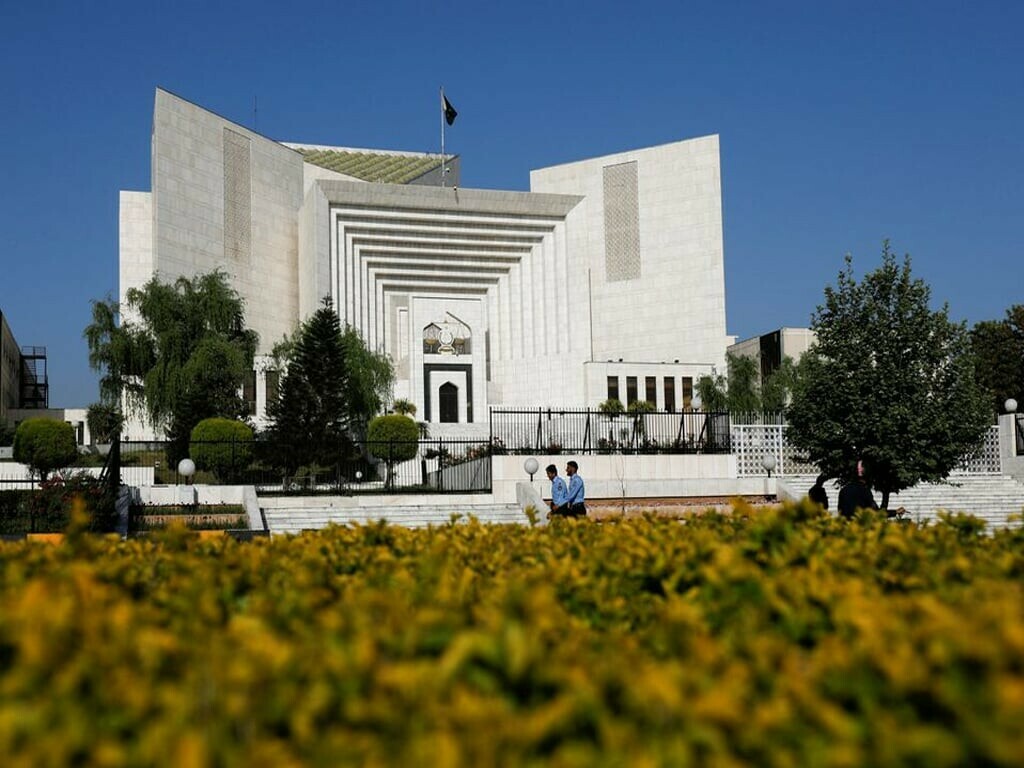

Justice Jamal Khan Mandokhail of the Supreme Court on Tuesday questioned whether the National Assembly has constitutional authority to levy taxes that extend beyond a single financial year.
A five-member bench headed by Justice Aminuddin Khan was hearing petitions against the validity of the amended Section 4C of the Income Tax Ordinance, 2001, for the tax year 2023.
Representing the Federal Board of Revenue (FBR), senior counsel Hafiz Ehsaan Ahmad Khokhar argued that the matter was not about legislative competence. He maintained that under Article 77 of the Constitution, parliament holds exclusive powers to impose taxes, and the super tax introduced through the Finance Acts of 2015 and 2022 was within its lawful authority.
Additional Attorney General Chaudhry Aamir Rehman informed the bench that the federal government would submit a written response soon. Earlier, on April 4, 2024, the Islamabad High Court had directed taxpayers to continue paying liabilities under the amended Section 4C.
The super tax, first imposed in 2015, applies to individuals, associations of persons, and companies earning over Rs500 million—at 4% for banks and 3% for other sectors—to support rehabilitation of displaced persons.
Khokhar further noted that Section 4B, which initially introduced the levy, had been upheld by all high courts. He dismissed claims of double taxation, stating the super tax is part of income tax on high earners rather than a separate levy, similar to a surcharge or advance tax.
He cautioned that judicial overreach in such fiscal matters could disturb the constitutional balance of powers.