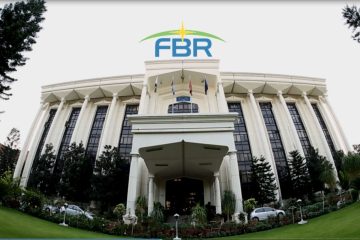


The Planning Commission has expressed significant reservations regarding the Federal Board of Revenue’s (FBR) proposed expenditure of Rs2.237 billion for the procurement of 179 vehicles, including 15 fully bulletproof units, under its Rs41 billion Revenue Raises Project. The Commission is urging a thorough review of this allocation, citing the Finance Division’s ongoing austerity measures.
The Revenue Raises Project, a key initiative underpinning the Prime Minister’s FBR transformation plan, is financed by a $150 million World Bank loan with an annual interest rate of 2.5 percent over 30 years. Despite its robust economic projections, including benefit-cost ratios of 42 to 70 and an internal rate of return (IRR) of 130 percent to 195 percent, the Planning Commission has identified a lack of stringent oversight in its implementation, particularly concerning the vehicle procurement.
“An amount of Rs2,237.5m has been proposed for procurement of 179 vehicles of different makes at a unit cost of Rs12.5m for Digital Enforcement Units without provision of specifications of vehicles,” the Planning Commission highlighted, demanding a rationalization of the expense “in light of austerity measures of Finance Division.”
FBR Defends Procurement as Essential for Operational Needs
In response, the FBR has firmly defended the procurement, asserting its critical importance for effective operational needs across diverse terrains where digital enforcement stations are slated for establishment.
“The proposed vehicles represent the minimum essential specifications necessary for effective field operations, with no inclusion of luxury features. The selection strictly adheres to functional utility for anti-smuggling activities,” the revenue authority stated. The project is anticipated to reach completion in June 2027.
The FBR also underscored the substantial cost savings expected from the project’s investments in information communication technology (ICT) hardware, estimating approximately $100 million in nominal terms. This investment in the FBR’s data center and network equipment is deemed unavoidable to prevent the failure of the organization’s ICT systems, with the FBR advocating that a failure to invest soon could incur costs of around $200 million to rebuild data centers.
Broader Project Aims and Systemic Tax Challenges
The Planning Commission noted that a key end-of-period target for the project is to reduce customs clearance time at the border to 48.5 hours from a baseline of 97.5 hours.
The broader program, initially conceived in 2017, aims to achieve a 17 percent tax-to-GDP ratio. Currently, this ratio hovers around 10 percent, significantly below the Asia-Pacific average of 19.3 percent. The Planning Commission further observed that the change in the base year of national accounts will likely further depress Pakistan’s tax-to-GDP ratio. Studies indicate that 64 percent of economic activities remain undocumented, leading to substantial tax revenue losses. The Commission also criticized the country’s overregulated tax system, with a multitude of taxes stifling businesses.
“The cost of documentation of tax compliance even for a small business is around Rs250,000,” the Planning Commission stated, pointing out that cash circulation in Pakistan stands at 28 percent, compared to 18 percent in India and 17 percent in Bangladesh.
Call for Tax Reforms and Digitization
To address these systemic issues, the Planning Commission has advocated for comprehensive reforms focused on simplifying tax procedures, reducing the number of levies, and accelerating the digitization of the tax system to integrate it with broader economic activity.
The project also encompasses mobile tax facilitation services, initiatives to enhance taxpayer compliance, the establishment of a forum for technical consultations with provincial tax authorities on tax harmonization, staff capacity-building, backup power equipment upgradation, and the development of control rooms and monitoring systems.
The FBR has recently adopted Strategic Plans for the Inland Revenue Service (IRS) and Pakistan Customs, with key components of the transformation plan including digital transformation of value chains, introduction of tracking technology, and implementation support for these digital initiatives.
Additionally, 37 digital enforcement stations will be equipped with both hard and soft interventions to combat smuggling. Of these, 24 will be strategically positioned along the Indus and Hub rivers and surrounding areas to act as a protective barrier, supported by three mobile enforcement units. Another 10 stations will be established at key checkpoints in Balochistan.
The Customs Tracking System, a crucial element, will be integrated with existing databases to effectively identify and target individuals or vehicles involved in transporting smuggled goods on which duties and taxes have not been paid.
The FBR anticipates its reform efforts will generate an additional $81 billion by the end of fiscal year 2028-29. The project further covers the replacement of end-of-life ICT equipment, cloud infrastructure, updated software licenses, data warehousing, business intelligence tools, and complete LAN and VoIP connectivity for field offices.
As part of the Rs2.237 billion allocation, the FBR will also procure 350 bulletproof jackets and helmets for operational personnel. The tax authority justified its expanded resource needs by highlighting a fourfold increase in tax filers, from 1.5 million in 2017 to over 6 million by the end of June 2024, and the growing volume of third-party data being collected to broaden the tax base and identify defaulters.